
Pseudolinguistics
Where Familiarity Meets Falsity


Man, on account of the indefinite nature of the human mind, whenever that mind is overthrown by ignorance, makes himself the measure of all things. - Giambattista Vico
I. The Rise of Pop Linguistics
I believe it’s fair to say that the amount of linguistics content on social media, especially YouTube, has increased drastically over the last couple of years. At its face, people seem to be genuinely curious about language, its importance, and its fascinating intricacies. There are great channels, such as Etymology Nerd, human1011, and Nardi (my personal favorites) who are brilliant, well-educated, and convey concise bits of actual linguistics to a public audience. The sharing and proliferation of these ideas is great; and the popular interest in linguistics has given life and vigor to a field which, even ten years ago, would not have enjoyed nearly the same public success; even success in academic circles. Janet Martin-Nielsen’s 2011 paper argued that linguistics as a social science has faced relative isolation from other social sciences due to two main factors:
First, in the heady years of the postwar era, linguists opted out of the broader American social science community. As a result, they are not found in the major social science debates and controversies of the day. Second, American linguistics is imbued with historical-developmental and orientational qualities that stand it apart from the Big Five social sciences. These two factors have, each in their own way, led to a relative isolation of linguistics—an isolation starkly reflected in the historiographic lacuna. (p. 151)1
That paper was written over a decade ago, and the lacuna seems to be closing. The popularization of linguistics, I believe, is a good thing overall, and provides a way out of this lacuna. People, especially young people, becoming interested in a subject makes them more likely to engage with it; the more likely they are to engage with it, the more likely they are to consider that subject as a legitimate career path. This creates a positive feedback loop, assuming that linguistics stays popular. Fresh academics publish research, which is picked up by communicators and educators, who then spread that information into the public sphere where more people can see it, which then produces more academics, and so on.
While this is all well and good, I have noticed an interesting, if not a somewhat infuriating trend happening within the world of pop linguistics that isn’t even restricted to the current boom in linguistics content. Aristotle claimed that philosophy starts with wonder; it seems like linguistics does as well. Here is a way to study language in a serious and rigorous way; this is how you can get at the core of one of the main aspects of your life. It really is a beautiful and amazing thing to be able to study. But this excitement gives way to some epistemic vices. Since language is such an involved and familiar part of people’s lives, I feel as if they’re more likely to make off-the-cuff claims about it without doing any proper research. And this, I believe, is a bad thing; I suggest calling this phenomenon “pseudolinguistics”: the practice of bullshitting about language based on personal experience and superficial observations. I think this should be viewed as a subset of pop linguistics; there’s plenty of good linguistics content, and plenty of eager listeners and readers who engage with proper linguistic methods, but the opposite is true as well. If our above hypothesis is true, it should maintain throughout any era of popular engagement with linguistics, not just its current rise.
I would also like to say before starting that I’m a philosopher-in-training who currently specializes in the philosophy of language, not a linguist, and I may have gotten some aspects of the field incorrect. The philosophy of language and linguistics are two separate fields with much overlap, but have widely differing methods. I am more than happy to be corrected by professionals in linguistics or other fields; I just wanted to bear the standard for the field in this instance since I am somewhat acquainted with it and have legitimately studied it.
II. Some Bold Claims
Let us elaborate with some examples. To keep it simple, I’ve prowled through the comment section of a YouTube video; more specifically, a TED Talk about how language shapes the way we think by cognitive scientist Dr. Lera Boroditsky. This talk was published on May 2, 2018, 6 years ago. I’m using this video as an example of how people made these claims even before the linguistics boom of the 2020s; the phenomenon isn’t just relegated to the present time.
*Quick disclaimer: all comments used as examples here will have their authors anonymized for the sake of their privacy.*
This was one of the first comments that caught my eye:

This commenter seems genuinely curious, but shows a marked lack of understanding about how language works. A lot of folks seem to think, based on things like the Sapir-Whorf hypothesis, that the language you speak influences the way you think; as if there was a causal direction of fit going directly from language —> thought. I believe most linguists, philosophers, cognitive scientists, and psychologists would agree that language and thought are intimately connected; but to say that one poses unilateral constraints on the other is fallacious. We gain new concepts, ideas, and attitudes, not languages, at least in the strict sense.2 Language changes and evolves with respect to the social attitudes, ways of life, and patterns of thought that we have. It’s not as if it’s just a vehicle for us to express our thoughts; if it is not identical with thought, it is at least intimately connected with and evolves alongside it. Language by itself does not restrict us; this is evidenced by the very fact that it evolves! The same theme can be observed with this comment:

Of course, we don’t have to doubt the claim that Vietnamese people are friendly and warmhearted. What we have to doubt is the idea that the Vietnamese language is what causes those traits; again, languages are not the things calling people. People call other people; those specific lexical items in Vietnamese are expressions of a cultural attitude regarding kinship hierarchies and seniority. People immediately go for the more general idea, the languages that they’re using in everyday life, rather than the specific claims whose truth-values actually matter. When Ludwig Wittgenstein famously proclaimed that “The limits of my language mean the limits of my world” (“Die Grenzen meiner Sprache bedeuten die Grenzen meiner Welt”) in his Tractatus Logico-Philosophicus, he wasn’t arguing that language imposes the limits. Rather, as T.R. Martland puts it,
To assert that the limits of my language mean the limits of my world is to assert that language is not a coat or map which we make to fit some previously established limit but that it is an activity which is bound up with the development of these limits themselves. (p. 20) (Italics added)3
To round off the gems of this comment section, let’s conclude with a particularly irritating one:

Again, this person just seems to be attempting to connect the dots, but this idea is quite silly. Just for context, I’m a Mexican Spanish speaker, with experience in multiple other Romance languages, including Latin itself. The verbs “ser” and “estar” in Spanish do indeed perform the functions that the commenter stated. It’s not grammatically correct to use “ser” such as in “Soy en el baño.” Instead, you’d use “estar”, and say “Estoy en el baño.” “Estar” is typically used in contexts of location. “Ser” is typically used to denote the more permanent properties of some thing. “Soy estudiante” is grammatically correct. There’s nothing lost in translation, however, when translating either of these sentences into English. In fact, both the Spanish and English versions are extensionally equivalent. “Estoy en el baño” is still “I’m in the bathroom.” “Soy estudiante” is still “I’m a student.” Saying that either of these English equivalents “aren’t able to express your idea totally” is absurd. There’s something else to be said, though, regarding the contexts in which different variations of an extensionally equivalent phrase are used.4 I won’t go into that debate here.
Of course, there’s a more salient argument here. There may be some terms or phrases in other languages that may be “untranslatable” that don’t reduce to extensionally equivalent statements. “Saudade” in Portuguese is an oft-cited example. “Eudaimonia” (εὐδαιμονία) or “sophrosyne” (σωφροσύνη) in Ancient Greek are examples I’ve come across in doing philosophy. Many argue that these words capture something that just isn’t there in English or other languages. But are they untranslatable, or just difficult to translate? I can attempt to explain, although long-windedly, the sense of each of these words. 1) A kind of longing, in addition to a sense of nostalgia and sadness; 2) a sort of higher personal good or flourishing, the aim of one’s doings and the fulfillment conferred by virtue; and 3) a kind of practical knowledge of one’s self (though even the Greeks themselves were confused by this word). Untranslatable seems to me to often be a misnomer for “difficult to translate”. Of course, one may prefer to read something or watch something in language A rather than language B; but that choice isn’t a function of translatability so much as it is a matter of easily ascertaining certain social connotations, psychological factors, comfortability, and other hidden variables. It is still very much a debate as to whether languages or lexical items within languages can be truly “untranslatable”.5
III. An Interesting Etymology
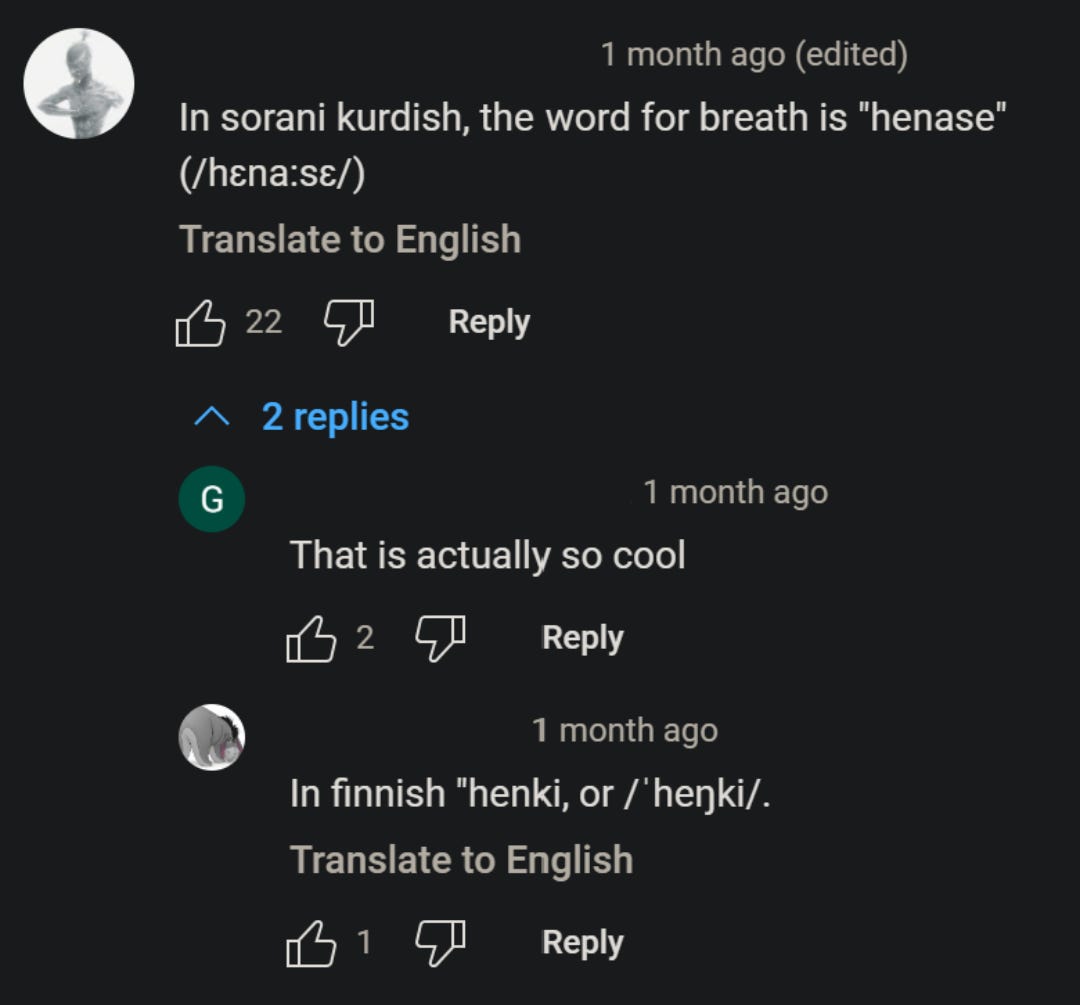
Now, let’s have some fun with folk etymologies, an especially prevalent branch of pseudolinguistics.6 Etymology is the study of the evolution of words. On a broader scale it gives linguists insights into how languages generally evolve; by comparing words in a language family and their etymological histories, linguists can reconstruct the ancestor word of all of those daughter items. This is known as the comparative method. Folk etymologies are etymologies constructed to explain some similarity between words of interest, but without rigorous proof or evidence. The following comment was taken from Nardi’s YouTube Short on the evolution of “anime”, as in a particular style of Japanese animation, from its Proto-Indo-European root, posted on February 12, 2025:
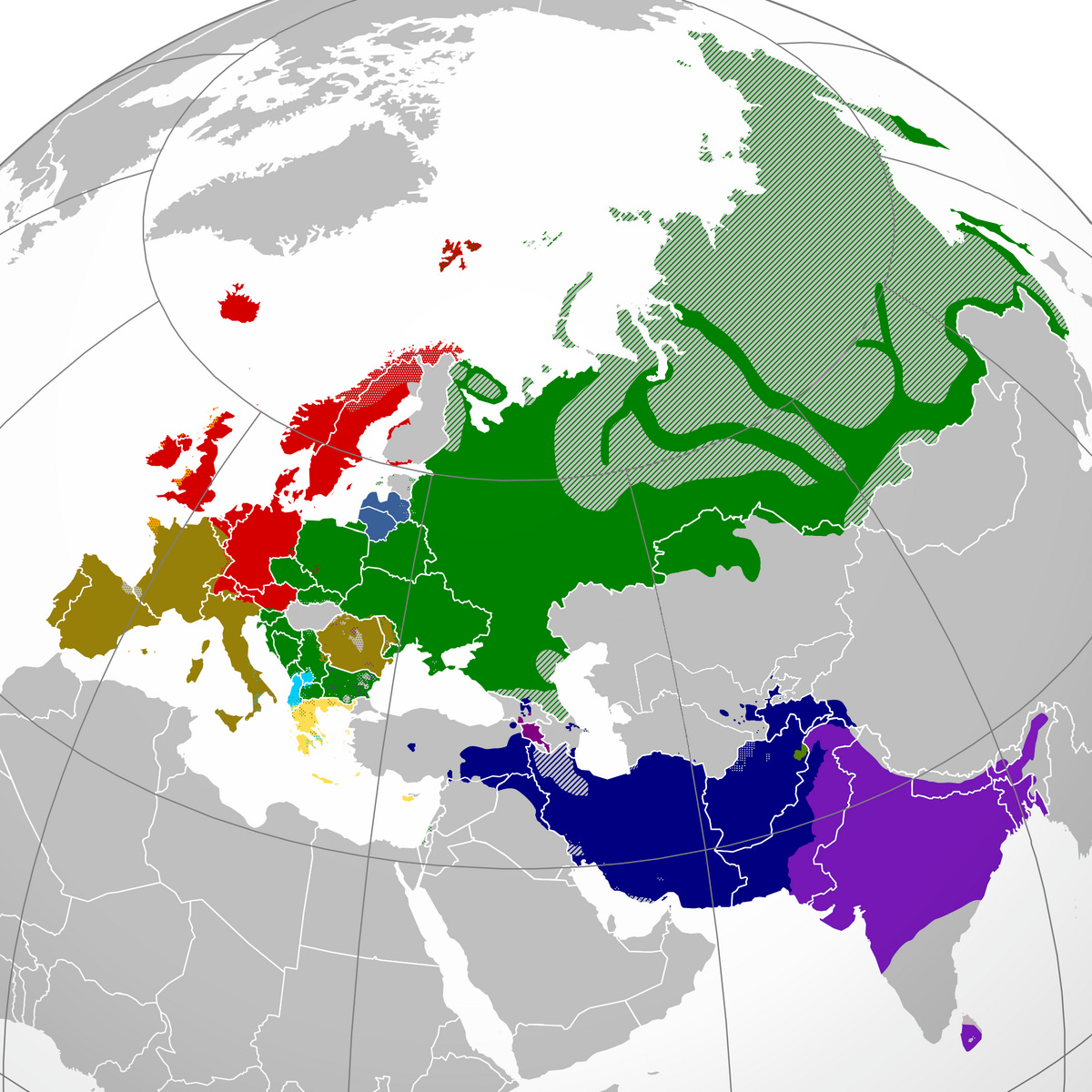
For some background, Proto-Indo-European, or PIE, is the ancestor language of every language in the Indo-European language family. The Indo-European language family is the largest in the world by the number of speakers, and includes languages ranging from English, French, and Greek to Hindi, Persian, Lithuanian, and Russian.
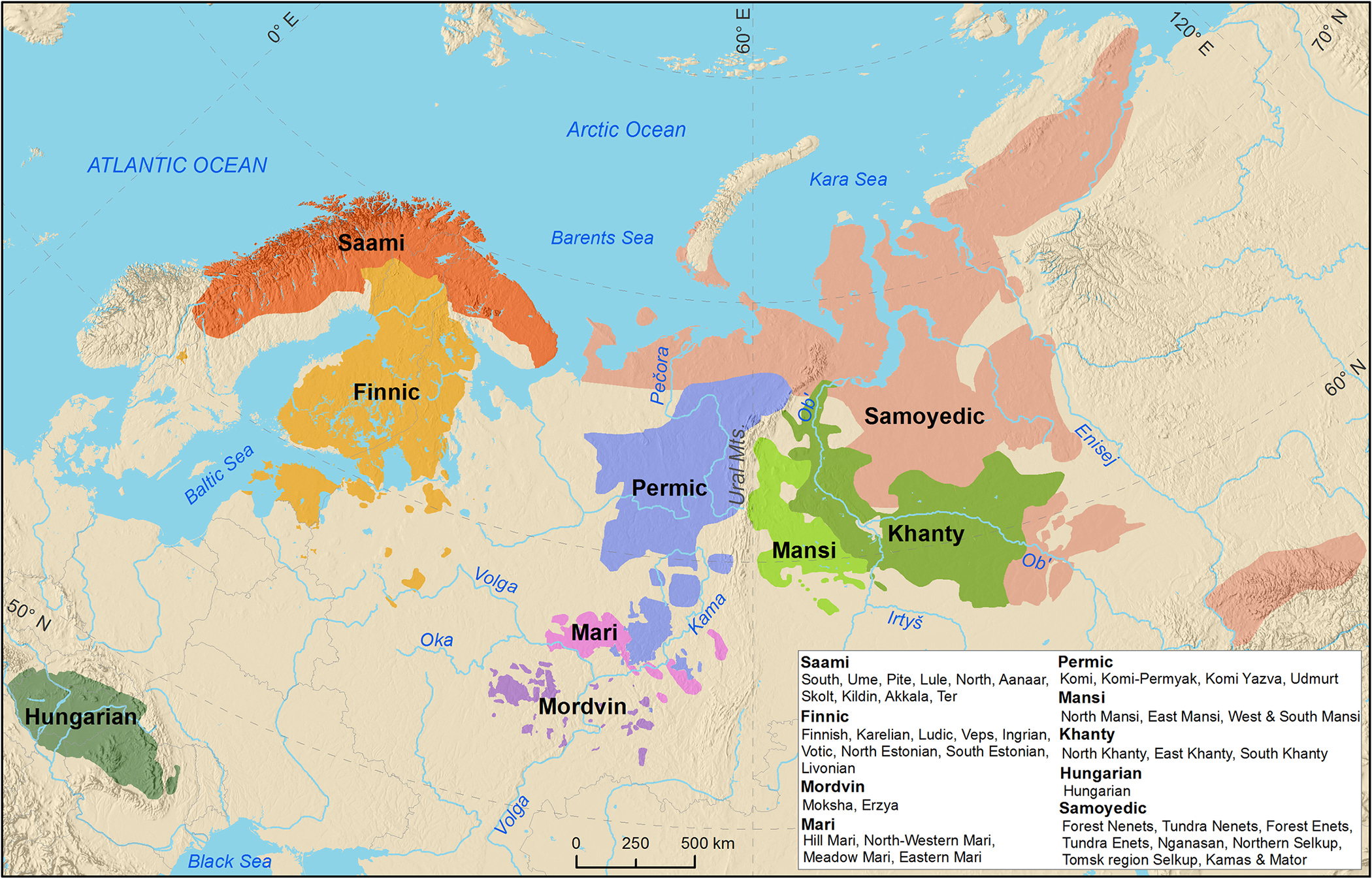
Nardi was demonstrating the gradual evolution of the word “anime” from its PIE root, *h₂enh₁-7 (“to breathe”), to its current form. The commenter who mentioned Sorani Kurdish was correct to assume that “henase” (ھەناسە) came from that same PIE root, since Kurdish is an Indo-European language. Indeed, “henase” derives from an earlier Proto-Indo-Iranian root, which in turn was derived from *h₂enh₁-.8 The person who mentioned Finnish, however, is stepping into folk-etymology territory. Finnish is not an Indo-European language; instead, it’s a Uralic language, the same broad family under which others such as Hungarian and Estonian fall. This language family is unrelated to the Indo-European family, and words of Indo-European origin in these languages are likely loans from other Indo-European languages. This commenter is not employing genuine methods here. Instead, that guess was likely made based on orthographic and phonological similarities alone. However, “henki” (“soul”, “breath”, “life force") is derived from Proto-Finnic *henki,9 which does not appear to have any Indo-European origins or influence. That root is a reconstruction based on other words in the Finnic branch of the Uralic family. Compare Estonian “hing”, North Karelian “henki”, and South Karelian “hengi”. The similarity is pure coincidence.
Of course, the commenter seems to have good intuitions. Perhaps a string of phonemes like /ˈheŋki/ in an Indo-European language really could have plausibly come about from *h₂enh₁-. But you can’t half-ass claims in linguistics. If such a relationship is to be claimed, rigorous evidence needs to be provided in support of that claim, as in any other scientific field. Honestly, I would’ve been fine with the commenter’s proposition if they had qualified it beforehand; they could have noticed the similarity, posited a possible connection, and inquire as to whether it was the case without having to state its relationship to the Indo-European family as if it were fact without good reasons beyond superficial resemblances. If you’re not careful, the inquiries you meant to fill the gaps in your knowledge end up appearing to others as if they were factual.
IV. Final Thoughts
I’m afraid that linguistics is particularly disposed to these kinds of pseudo-claims since, again, language is familiar to us all. We don’t often grow up around particle accelerators, pipettes, and petri dishes, and so are wary of our unfamiliarity with them; but even if we did, and understood generally what they were used for, we should nonetheless remember our fallibility and consult the experts, and/or their books, papers, and resources, if we aren’t sure about some aspect of their use. The craftsman may not know everything there is to know about the metallurgical process behind the forging of their hammer; the carpenter may not know everything about the taxonomic classification of the trees they use to construct a house; and as such the possessor of speech may not know everything about the processes behind the evolution and history of their language or languages. Our repeated engagement with it, however, gives us a dangerous epistemic facsimile we can hide behind.
It’s perfectly fine to be curious and wonder at the nature and workings of something. It enlivens my spirit to see people be interested in language and all of its fascinating features; but as with any other science or field of inquiry, it should be respected, and we should hesitate about making linguistic claims when we don’t have the requisite knowledge, resources, or evidence. When we connect the dots without any reason to other than some superficial thesis, we’re doing the field a disservice, and we’re doing ourselves a disservice in the process. When we’re too quick to make claims and rush the process of acquiring truth, we end up losing sight of what we were looking for in the first place. Be meticulous. Be anal. Don’t be a pseudolinguist; or a pseudo-anything, for that matter.
Martin-Nielsen, J. (2011), A forgotten social science? Creating a place for linguistics in the historical dialogue. J. Hist. Behav. Sci., 47: 147-172. https://doi.org/10.1002/jhbs.20493
Here I’m talking about language in the sense in which it is talked about in linguistics. As a philosopher, I do have some metaphysical claims about the nature of language that wouldn’t fit neatly within the frame of linguistics. I would say that language, the observable phenomenon that can be scientifically studied, is the object of the above statement; but language, the metaphysical entity that we possess, is a different story altogether.
Martland, T. R. (1975), On ‘The Limits of My Language Mean the Limits of My World.’ The Review of Metaphysics 29, no. 1: 19–26. http://www.jstor.org/stable/20126734.
See Ethan Nowak’s forthcoming article in Nowak, E. (forthcoming). Sociolinguistic variation, slurs, and speech acts. Journal of Philosophy.
Personally, I don’t think so, and am convinced in large part by Donald Davidson’s (1973) argument. In fact, I’m writing my thesis on it!
I could have done some more fruitful etymological research if I had my books back at home, especially A Dictionary of Selected Synonyms in the Principal Indo-European Languages by C.D. Buck. Unfortunately, I’ll have to make do with internet research for now.
In linguistics, an asterisk (*) in front of a word is used to indicate that the word has been reconstructed from existing data. PIE is believed to have actually existed, but there are no written records of it. As such, linguists must reconstruct what the language would have looked like using other methods.
See the etymology and use in Kurdish here.
See the Wiktionary entry on “Henki” here, and the entry in the Dictionary of Contemporary Finnish here.